What a Truly Inclusive Retirement Community Looks Like
When people talk about an "inclusive retirement community," the phrase can mean almost anything — and that's part of the problem.
In senior living marketing, inclusion is often treated like a brand adjective. It shows up on websites, brochures, and tour materials because it sounds reassuring. But for someone seriously evaluating a retirement community — especially one they may one day call home — the word “inclusive” should carry more weight.
A truly inclusive retirement community isn't defined by surface-level messaging, seasonal gestures, or a carefully chosen set of photos. It's reflected in how people are welcomed, how decisions get made, how residents participate in community life, and whether the environment genuinely supports belonging and connection across a wide range of people and life experiences.
That distinction matters more than ever. People exploring senior living today are often looking for something beyond services or amenities — they want a community that feels aligned with who they are, what they value, and how they want to live.
At Pilgrim Place in Claremont, California, that kind of alignment is not treated as secondary. Inclusion isn't a marketing add-on — it's woven into a larger commitment to purposeful aging, lifelong learning, justice, and community life. That doesn't mean perfection. But it does mean belonging is something built into the culture, not left to chance.
If you are evaluating retirement communities, this guide will help you look past vague claims and identify the real markers of an inclusive community — from policies and staff training to programming, resident leadership, physical design, and the everyday experience of living there.
The Difference Between Looking Inclusive and Actually Being Inclusive
Many retirement communities know how to present themselves well. A welcoming website. A polished mission statement. A calendar that includes a few multicultural events or seasonal celebrations. None of those things are bad. But they are not, on their own, proof of inclusion.
Surface-level inclusion is easy to create because it costs very little. It often looks like symbolic gestures that do not meaningfully change how a community operates. A heritage month bulletin board. A one-time cultural event. A broad statement about diversity without any visible evidence of how that value shapes daily life.
Real inclusion tends to show up differently.
It appears in written policies, in how the staff is trained, in whether residents feel safe expressing who they are, in whether community life reflects a range of identities and lived experiences, and in whether people actually have a voice in the place where they live.
This is where a retirement community’s culture becomes much more important than its messaging.
If a community says it values inclusion, but residents have no meaningful input, staff are not equipped to support diverse needs, or the environment quietly centers only one kind of life experience, that gap becomes noticeable over time. People feel it even if they cannot always name it right away.
That’s why tours matter so much. Not just the formal presentation, but what you observe in the in-between moments.
Pay attention to how staff talk about residents — not in formal presentations, but in passing. Whether they know people's names, reference their histories, speak about them as individuals rather than as a general population. That kind of familiarity is hard to perform consistently, and it tends to reveal more about a community's culture than anything in a brochure.
One of the most useful questions you can ask early is:
Can you tell me how inclusion shows up here in everyday life?
A strong community should be able to answer that clearly, not just philosophically.
Policies Matter — But Practice Matters More
One of the clearest ways to evaluate inclusion is to look at what is formalized and what is simply assumed.
A retirement community that takes belonging seriously should be able to speak clearly about its non-discrimination practices, resident rights, and staff expectations. This includes whether residents are protected and respected across differences in identity, background, culture, religion, family structure, orientation, ability, and care needs.
For example, in a genuinely LGBTQ+-affirming community, inclusion should go beyond symbolic support. Staff should understand how to respectfully use chosen names and pronouns. Policies around visitation, care planning, and resident dignity should be consistent and clear. The same applies to residents from different cultural or faith backgrounds. A community should not require someone to fit into a narrow social norm to feel welcome there.
But policies alone are not enough.
A document in a binder does not create belonging. The real test is whether staff know how to carry those values into day-to-day interactions. That is where training, leadership, and consistency matter.
When you tour a community, it is reasonable to ask:
• How are staff trained around inclusion and resident dignity?
• How does the community support residents from different cultural, spiritual, or identity backgrounds?
• How are concerns handled if a resident feels excluded or disrespected?
You are not asking for perfection. You are looking for evidence that these questions have already been thought about and taken seriously.
At a values-driven community like Pilgrim Place, those conversations tend to feel more natural because the broader mission already points in that direction. Inclusion is easier to sustain when it grows out of a larger culture of service, reflection, justice, and respect, rather than being introduced as a standalone initiative.
That difference often becomes visible very quickly.
Programming Should Reflect the People Who Live There
One of the fastest ways to tell whether a retirement community is truly inclusive is to look at its programming.
Not just whether there are activities on the calendar, but whether the life of the community actually reflects the people living there.
In many communities, programming is built around what is easiest to schedule or what has “always been done.” The result is often a predictable rotation of events that may technically fill a calendar but do not necessarily create deeper engagement or a stronger sense of belonging.
An inclusive community usually feels different.
It makes room for a wider range of interests, experiences, traditions, and ways of participating. That may include cultural celebrations, discussion groups, educational programming, creative expression, intergenerational opportunities, faith or spiritual gatherings, volunteerism, advocacy, or simply social spaces that do not assume everyone wants the same kind of community life.
Just as important, inclusive programming is not only offered to residents. It is often shaped with them.
That distinction matters.
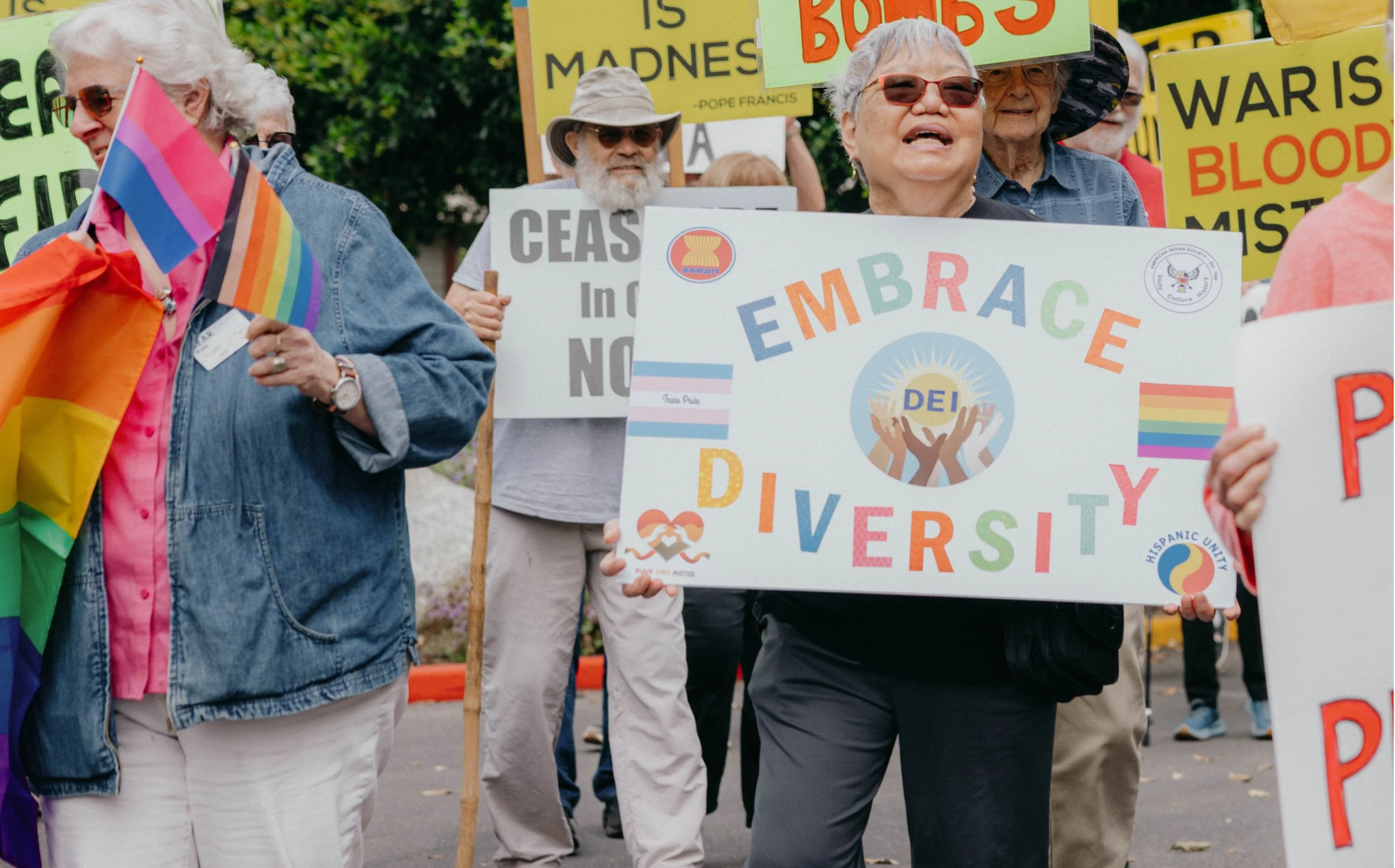
When residents have meaningful input into the life of the community, programming tends to become more reflective, more relevant, and more genuinely shared. It also sends an important message: your presence here is not passive. You are part of what makes this place what it is.
That aligns especially well with Pilgrim Place, where community life is shaped not only by services and support, but by a broader culture of engagement, purpose, learning, and participation. For many people, that kind of environment feels fundamentally different from a more standardized senior living model.
When evaluating a community, ask:
• How are programs selected?
• Do residents help shape the calendar?
• Are there opportunities for intellectual, creative, spiritual, and service-oriented engagement?
The strongest communities understand that inclusion is not just about who is invited. It is also about whether different kinds of people can genuinely see themselves in the life of the community.
Resident Voice Is One of the Clearest Signs of Real Inclusion
If you want to know whether a retirement community is truly inclusive, look at who holds influence.
A community can speak beautifully about belonging, but if residents have little say in how the community functions, that language starts to lose credibility.
This is why resident governance matters so much.
When residents have meaningful opportunities to shape community life — whether through committees, advisory groups, leadership structures, shared planning, or other forms of participation — inclusion becomes more than a social value. It becomes part of how the community actually operates.
That kind of resident voice creates something important: shared ownership.
People are not just living in a place that has been designed for them by someone else. They are helping shape the rhythms, priorities, and culture of the place they call home.
That matters at any stage of life, but it can be especially meaningful in a retirement setting, where many people are intentionally looking for a community that still honors autonomy, agency, and contribution.
This is also one of the reasons Pilgrim Place stands apart from more conventional retirement community models. Its culture has long been shaped by people who value service, justice, learning, thoughtful engagement, and active participation in community life. That foundation creates a different kind of environment — one where belonging is not just emotional, but also structural.
When you visit a community, it is worth asking:
• How do residents participate in decisions here?
• Are there resident committees or councils?
• Do those groups have real influence, or are they mostly symbolic?
A community should be able to answer those questions honestly and specifically.
If residents are treated like contributors rather than passive recipients, that is usually a very good sign.
Physical Design Should Support Belonging, Not Separation
In an inclusive retirement community, physical design should do more than meet accessibility standards. It should make daily life feel easier, more welcoming, and more shared for the people who live there.
That includes practical design elements like walkable pathways, accessible common areas, thoughtful lighting, intuitive layouts, and spaces that are easier to navigate over time. But the deeper question is not simply whether a campus is technically accessible. It is whether the physical environment allows people to continue participating in the life of the community with dignity and ease.
A place can meet legal standards and still feel limiting in everyday life. A building may technically comply with accessibility requirements, but still create subtle barriers that leave some residents feeling separated from the spaces where community actually happens.
The more thoughtful approach is to ask whether the environment supports shared life.
Can people comfortably move through the campus and take part in daily routines, events, meals, conversations, and outdoor life? Does the community feel connected, or does it quietly separate people based on mobility, energy level, or changing needs?
At Pilgrim Place, this kind of inclusion is part of what makes the campus experience feel distinctive. The community’s setting in Claremont, California, offers a walkable, reflective, and connected environment where outdoor spaces, gathering places, and residential life all contribute to a stronger sense of continuity and belonging. That matters because the built environment affects not only comfort, but also confidence, independence, and participation.
Physical inclusion also extends beyond mobility. It includes whether spaces feel intuitive and welcoming for people with hearing or vision changes, whether events are easy to access, and whether the environment supports the practical realities of aging without making those realities feel limiting.
The best design of a truly inclusive community often does not call attention to itself. It simply allows people to keep living fully and participating naturally in the life around them.
A Community’s Values Should Be Visible in Daily Life
One of the clearest signs that a retirement community is genuinely inclusive is that its values are visible without needing to be explained over and over again.
You can usually feel the difference.
In some communities, inclusion is something leadership talks about. In others, it is something that quietly shapes the culture. It influences how people are welcomed, how conflict is handled, how traditions are honored, how differences are respected, and how community life is held together over time.
That kind of culture is hard to fake.
It tends to show up in the tone of conversations, the openness of shared spaces, the trust between residents and staff, and the way people speak about the community when they are not “on script.”
This is one of the reasons founding mission matters more than many people realize.
Communities that were built around a deeper set of values often approach inclusion differently than communities trying to retrofit it into an existing model. When belonging, justice, compassion, reflection, and service are already part of the culture, inclusion is more likely to be woven into the everyday fabric of the place.
That is part of what gives Pilgrim Place its distinct identity.
For many prospective residents, what stands out is not simply the continuum of care or the setting in Claremont. It is the feeling that this is a place where thoughtful people can continue living with purpose, connection, and integrity — in a community that values both individuality and shared life.
That kind of belonging cannot be reduced to amenities. And for many people, it is one of the most important things they are actually looking for.
How to Tell If a Retirement Community Is Truly Inclusive
When you are visiting communities, it helps to move beyond broad impressions and ask more specific questions.
Here are some of the most useful things to look for:
Ask about culture, not just care
A community may have strong services and still feel socially narrow or emotionally impersonal. Ask how the community supports belonging, participation, and resident voice.
Look for resident involvement
Pay attention to whether residents help shape programming, governance, committees, or shared traditions.
Notice whether inclusion feels natural
Does the community seem genuinely welcoming and comfortable, or carefully presented for the tour?
Ask how staff are prepared
Find out whether staff receive ongoing training related to resident dignity, communication, inclusion, and support across different needs and backgrounds.
Observe the environment
Does the campus feel connected, walkable, intuitive, and welcoming? Can people remain part of the life of the community as needs change?
Listen for specificity
Communities that are serious about inclusion can usually describe how it works in practice. Vague answers are often revealing.
In the end, a truly inclusive retirement community should feel like a place where people can continue becoming more fully themselves — not a place where they are expected to shrink, adapt, or quietly fit into someone else’s version of community.
That is a much higher standard. But it is also the one that matters most.
What a Truly Inclusive Retirement Community Looks Like at Pilgrim Place
Inclusion in a retirement community is not just about representation, accessibility, or programming, though all of those things matter. At its deepest level, it is about whether people are able to live with dignity, connection, voice, and belonging.
That kind of community is not built through branding alone. It is built through values, culture, structure, and the everyday experience of life together.
At Pilgrim Place, that vision of community is shaped by something deeper than convention. It is rooted in a long-standing commitment to purposeful aging, lifelong learning, inclusion, reflection, and care across every stage of life. For people looking for more than a standard retirement community — for those seeking a place that feels thoughtful, grounded, and genuinely human — that difference matters.
If you are exploring what an inclusive, values-driven retirement community can look like in practice, Pilgrim Place offers a meaningful place to begin.
Schedule a visit, contact our team, or learn more about life at Pilgrim Place in Claremont, California.
Frequently Asked Questions About Inclusive Retirement Communities
-
A truly inclusive retirement community goes beyond surface-level marketing. It means the environment is structurally and culturally designed to support residents from all backgrounds, including different identities, cultures, faiths, orientations, and abilities. Inclusion is reflected in resident governance, staff training on resident dignity, and programming that honors a wide range of lived experiences rather than a "one-size-fits-all" social model.
-
To look past the brochure, observe the "in-between" moments. Pay attention to how staff interact with residents—do they use preferred names and show familiarity with their unique histories? Ask specific questions such as:
"How are staff trained to support diverse needs?"
"Do residents have a meaningful vote in community decisions?"
"Can you provide examples of how inclusion shows up in daily life here?" Vague answers often signal that inclusion is a marketing add-on rather than a core value.
-
Yes. Communities like Pilgrim Place in Claremont prioritize being LGBTQ+-affirming by weaving inclusion into their foundational values. In an affirming community, policies regarding visitation, care planning, and resident rights are clear, and staff are trained to use chosen names and pronouns, ensuring every resident feels safe and respected.
-
Resident governance is one of the clearest signs of real inclusion. When residents serve on committees, advisory groups, or leadership councils, they move from being "passive recipients" of care to "active contributors." This shared ownership ensures that the community’s rhythms and priorities are shaped by the people who actually live there.
-
Physical inclusion goes beyond meeting ADA accessibility standards. It involves "universal design" that allows residents to remain part of community life even as mobility or sensory needs change. This includes walkable pathways, intuitive layouts, and social spaces that don't isolate residents based on their level of care, fostering a sense of continuity and belonging.
-
At Pilgrim Place, inclusion isn't a standalone initiative; it is an extension of our core mission of purposeful aging, justice, and service. Because our culture is rooted in lifelong learning and social responsibility, belonging is built into the fabric of daily life. This creates a unique environment where individual identity is celebrated within a deeply connected community.
