
The Benefits of Living in a Retirement Community in California
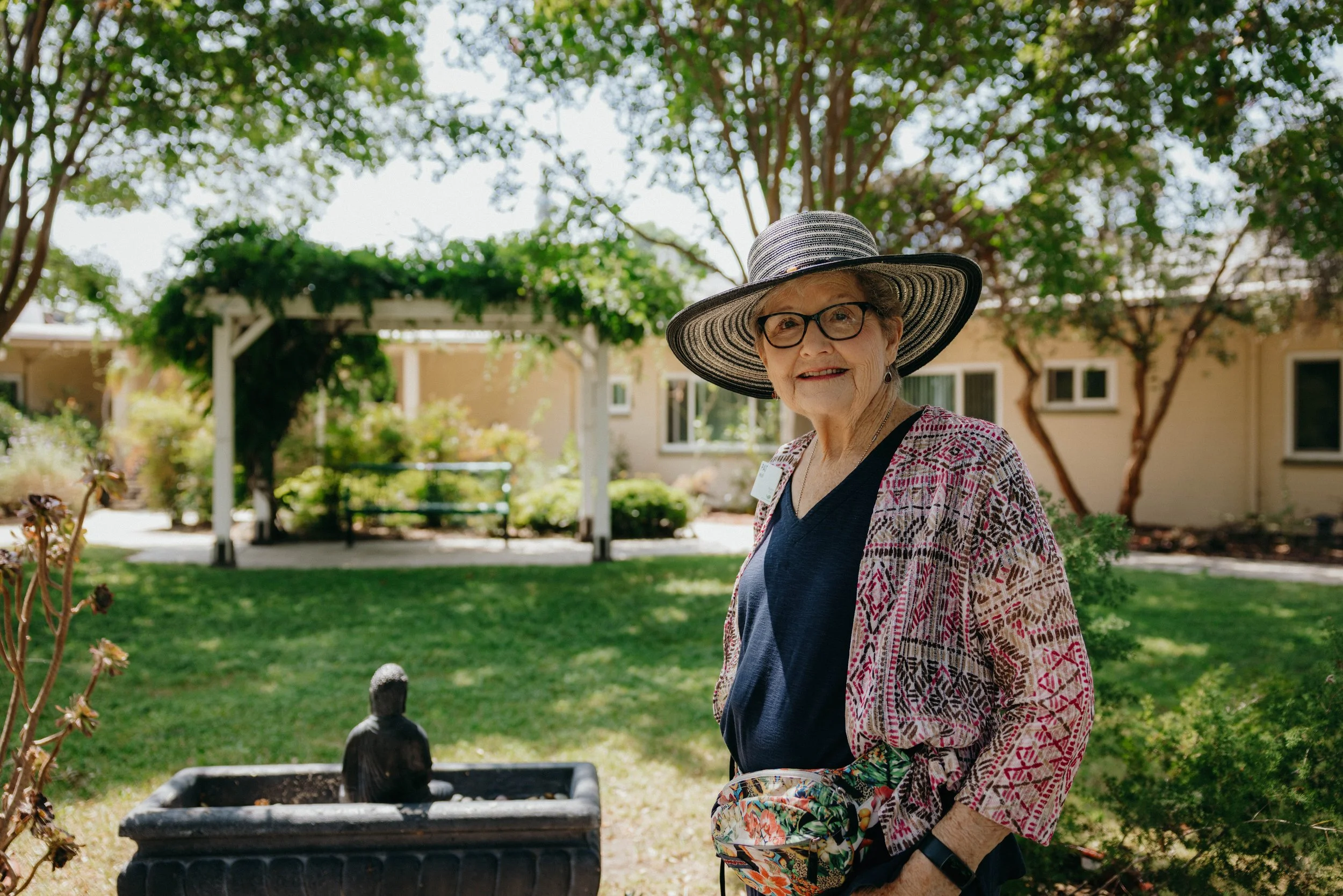
The benefits of living in a retirement community in California go well beyond the weather. California is a popular retirement destination for good reason: the practical and personal advantages of settling into a senior living community here run deep, from year-round outdoor access and favorable tax treatment to full continuums of care and active social calendars. In this article, you'll get a clear and specific breakdown of the climate edge, the financial case, healthcare access, social well-being, geographic variety across the state, and the exact questions to ask before you commit. This is a California-focused guide built to help you make a confident, informed decision.
Why California is an exceptional place to retire
The climate advantage most retirees underestimate
Mild, year-round temperatures do more for senior health than most people realize. Research on seasonal activity patterns shows that warmer temperatures and reduced winter constraints are linked to more daily steps, greater time outdoors, and more consistent low-intensity physical activity, walking, gardening, and the kind of movement that keeps joints healthy and moods stable. Cold-weather winters significantly reduce mobility and outdoor time, and the freeze-thaw cycle can reduce outdoor walking time and may indirectly affect mobility and activity levels over time.
Active adult communities in California are designed around this reality. Walkable campuses, trail access, outdoor common areas, and garden programming are built into the community infrastructure, not offered as seasonal perks. At a community like Pilgrim Place in Claremont, residents stroll 32 acres of beautifully maintained campus any day of the year, with the San Gabriel Mountains and nearby Claremont Colleges trails as a natural extension of daily life. That's not a minor detail. It's a structural advantage for long-term physical and mental health.
Financial benefits of living in a retirement community in California
California fully exempts Social Security benefits from state income tax. That includes retirement benefits, disability, and survivor benefits, all subtracted from state taxable income using Schedule CA (540). For fixed-income seniors, this is a meaningful and often underappreciated carve-out. Military disability payments receive similar treatment, providing added relief for veteran retirees. For a practical overview of how retirement income is treated in California, see this guide on California retirement taxes.
Yes, California has a high cost of living. But when you bundle housing, utilities, meals, maintenance, and base care services into a single monthly community fee, the financial picture shifts considerably. Predictability becomes its own financial benefit. Senior living communities across the state offer a structure that removes the guesswork from monthly budgeting, which matters when your income is fixed.
A culture built around staying active and engaged
California's strong orientation toward wellness and purposeful living shapes how retirement communities are designed and programmed. Retirees here are not expected to slow down and watch the years pass. They're invited to participate in them. That cultural expectation shows up in community programming, campus design, and resident leadership structures, through fitness centers open year-round, resident-led committees, and intergenerational initiatives like course auditing at nearby colleges. California communities have developed these features in response to genuine resident demand, not as marketing add-ons.
How the finances actually compare to staying in your home
What the monthly fee actually covers
Independent living fees in California typically range from $1,500 to $6,000 per month, with a statewide average landing between $3,000 and $4,000. Continuing Care Retirement Communities (CCRCs) follow similar monthly ranges but add a one-time entrance fee, generally starting at $100,000 and scaling with unit size and contract type. What you get for that fee is the key distinction: housing, utilities, meals, housekeeping, maintenance, activities programming, and foundational care services are bundled together.
That bundling matters because it eliminates the line-item unpredictability that comes with homeownership. No emergency HVAC repair, no roof replacement, no surprise plumbing bill. One monthly number covers the essential structure of your life, and it doesn't fluctuate with seasons or crises.
The hidden costs piling up at home
Aging homes in California carry real financial risk. Annual maintenance and repair costs for older single-family homes commonly run between $5,000 and $20,000 per year, and that number climbs as the home ages and as the owner's capacity to manage small repairs diminishes. Accessibility modifications add another layer: a basic package of grab bars, handrails, and improved lighting can reach $9,500, while a ramp, stairlift, or bathroom remodel pushes totals toward $30,000 to $75,000, particularly in higher-cost California markets.
Part-time home care adds a separate and significant expense. In Los Angeles, 44 hours per week of in-home care runs over $3,000 per month, a figure that can feel manageable until care needs grow. As they do, costs escalate quickly: 24/7 in-home care regularly exceeds $10,000 per month. Add property taxes (roughly 1 to 1.5 percent of assessed value annually) and utilities averaging $300 to $600 per month, and the "cheaper to stay home" assumption starts to fall apart.
When community living becomes the smarter financial move
For retirees with light care needs, private home costs can stay under $3,000 per month. That window narrows quickly. At moderate-to-high care levels, private home costs commonly reach $7,000 to $12,000 per month, while a well-structured retirement community holds comparable services within a lower or equivalent range with far more predictability. The crossover point arrives faster than most families expect, often before a formal diagnosis triggers the need for significant daily assistance. Planning ahead of that moment is what makes the financial case clearly in favor of community living.
Healthcare and on-site care that grows with your needs
One of the most practical advantages of a full-continuum retirement community in California is that your healthcare doesn't require a move when your needs change. CCRCs and communities with a full spectrum of services provide independent living, assisted living, memory care, and skilled nursing on a single campus. Transitions happen within familiar surroundings, with staff who already know your history and preferences.
On-site services in California's leading communities commonly include 24/7 clinical staffing in care-level settings, coordinated specialist access, rehabilitation services, hospice and respite care, and on-site diagnostics. For families, the continuity of care model carries significant emotional weight. You don't face the urgent scramble to find a new facility during a health crisis. The people, the campus, and the care infrastructure stay constant. That stability is difficult to replicate through any combination of home services.
Social life, wellness, and what community does for your health
The social and wellness programming in California retirement communities is extensive and well-supported by research. Yoga, tai chi, arts and crafts, cooking classes, book clubs, group outings, nutrition education, and fall prevention programs are standard across independent living, assisted living, and CCRC settings. These aren't extras. They're built into the week because the evidence supports them. For examples of research on community wellness and activity programs, see this study on community-based wellness programming.
Research on community-based wellness programming has linked consistent social engagement to reduced loneliness, improved self-esteem, better physical health markers, and greater independence. Structured companionship programs and evidence-based wellness initiatives are associated with lower rates of depression and better overall health outcomes compared to socially isolated home living. California's climate amplifies these benefits: outdoor programming, garden walks, and trail access are year-round realities here, not seasonal luxuries confined to a few warm months.
Belonging is not a soft benefit. Epidemiological research, including longitudinal studies on social isolation and aging, consistently links strong social connection to longer life, better cognitive function, and higher daily quality of life. Communities that center purpose and engagement alongside care, rather than treating social programming as an afterthought, produce better and more meaningful outcomes for residents. That distinction is worth examining carefully when you visit.
The benefits of living in a retirement community in California: coastal cities, urban hubs, and college-town options
California's senior living options span genuinely different environments. Coastal communities near San Diego or Marin County offer ocean access, mild maritime climates, and proximity to world-class medical centers. Urban settings in Los Angeles and the Bay Area provide density of specialized healthcare, cultural institutions, and international-caliber dining and arts. Each of these options carries premium pricing, particularly in coastal zip codes where monthly costs for assisted living can reach $6,500 to $10,000 in Los Angeles and Orange County markets.
The Inland Empire offers a compelling alternative for retirees who want quality without the coastal price tag or urban congestion. Claremont, in particular, has drawn attention as a college-town environment with walkable streets, strong local amenities, and a culturally rich atmosphere anchored by the Claremont Colleges consortium. Seniors living near the Colleges have access to free course auditing through the Claremont Avenues for Lifelong Learning (CALL) program, fitness facilities, lectures, and an intergenerational community that keeps intellectual life genuinely active.
Pilgrim Place sits at the center of this environment. The 32-acre campus is adjacent to the Colleges, offering walkable access to lectures, cultural events, arts programming, and trail networks. It's a full-continuum community with independent living, assisted living, memory care, and Five-Star skilled nursing, led by a resident culture grounded in public service, justice, and environmental stewardship. The advantages of retiring in California don't require a coastal zip code. They require the right community.
Questions worth asking before you choose a community
About costs, contracts, and what's included
Start with the specifics of the financial structure. Ask whether any portion of the entrance fee is refundable and under what conditions. Ask what the monthly fee covers and what triggers additional charges. California CCRCs operate under several contract types: Life Care (Type A) contracts bundle future care costs into predictable fees; fee-for-service (Type C) contracts keep base fees lower, but charge market rates as care needs increase. Understanding which model a community uses changes the long-term financial math significantly.
About care levels, culture, and daily life
Ask directly what happens when your care needs change, and whether that transition can happen within the same campus. Ask what a typical week looks like for a resident, not a curated version, but an honest account. Ask how residents are involved in community decisions. These questions separate genuinely resident-led communities from communities that are simply well-marketed.
Values alignment matters as much as care quality. A community whose culture reflects your own priorities, whether that's environmental stewardship or lifelong learning, will sustain your quality of life in ways that amenities alone cannot. If inclusivity is a top priority, look for communities that advertise and practice LGBTQ+ affirming retirement living. Visit in person, talk to residents directly, and trust what you observe.
The decision is clearer than it looks
The benefits of living in a retirement community in California are specific and practical: year-round climate that supports consistent physical activity, Social Security tax exemptions that protect fixed income, financial predictability that outperforms home costs at moderate-to-high care levels, healthcare continuity that removes crisis-mode transitions, and social programming with documented health outcomes. Add California's geographic diversity, from coastal communities to 55+ communities and college-town environments in the Inland Empire, and the range of options is genuinely broad.
The best decision comes from asking the right questions and seeing communities in person. If you're weighing the benefits of moving to a retirement community in California and considering the Claremont area, Pilgrim Place welcomes you to come take a look. Walk the campus, meet residents, and get honest answers about costs and care. A single visit tends to clarify more than months of online research. You can schedule a tour, request a detailed cost guide, or simply call to start the conversation. Learn more about our approach to personalized senior care at Pilgrim Place.
Frequently Asked Questions: Retiring in California
-
California is more tax-friendly for seniors than many realize. While the state has a higher general income tax, California fully exempts Social Security benefits (including retirement, disability, and survivor benefits) from state income tax. Additionally, military disability payments are often exempt. This can provide significant relief for those living on a fixed income.
-
The "California edge" isn't just about comfort; it’s about mobility. The lack of a "freeze-thaw" cycle allows for year-round outdoor activity. Research shows that retirees in milder climates take more daily steps and engage in more consistent low-intensity exercise like gardening and walking. This consistency is vital for maintaining joint health, cardiovascular strength, and stable moods.
-
On average, independent living fees in California range from $1,500 to $6,000 per month, with many high-quality communities landing between $3,000 and $4,000. For Continuing Care Retirement Communities (CCRCs), there is typically a one-time entrance fee starting around $100,000, which secures your priority access to higher levels of care later in life.
-
While staying at home may seem cheaper initially, "hidden costs" add up quickly. Aging homes in California often require $5,000 to $20,000 annually in maintenance. When you factor in property taxes, utilities, and the high cost of private in-home care—which can exceed $10,000 a month for 24/7 assistance—a bundled retirement community fee often becomes the more predictable and cost-effective choice.
-
A full-continuum community (like a CCRC) provides Independent Living, Assisted Living, Memory Care, and Skilled Nursing all on one campus. This model allows residents to transition between levels of care without the stress of moving to a new facility or searching for new doctors during a health crisis.
-
Claremont offers a unique "college-town" retirement experience. It combines walkable, tree-lined streets with the intellectual vibrance of the Claremont Colleges. Residents at communities like Pilgrim Place often enjoy intergenerational perks, such as auditing college courses through the CALL program, attending world-class lectures, and exploring local trail networks.
-
Yes. California is a leader in inclusive senior living. When touring, look for communities that explicitly value diversity and social justice. At Pilgrim Place, for example, our culture is rooted in a long history of activism, environmental stewardship, and intentional inclusivity for all residents.
