
Porter Hall and the Legacy of Mary H. Porter at Pilgrim Place
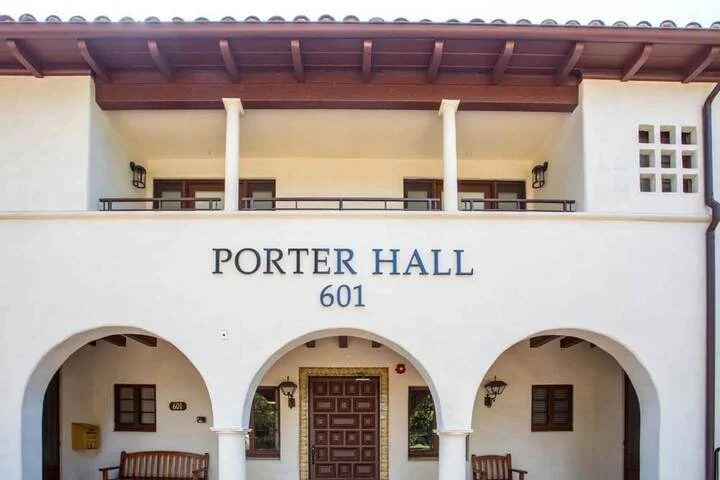
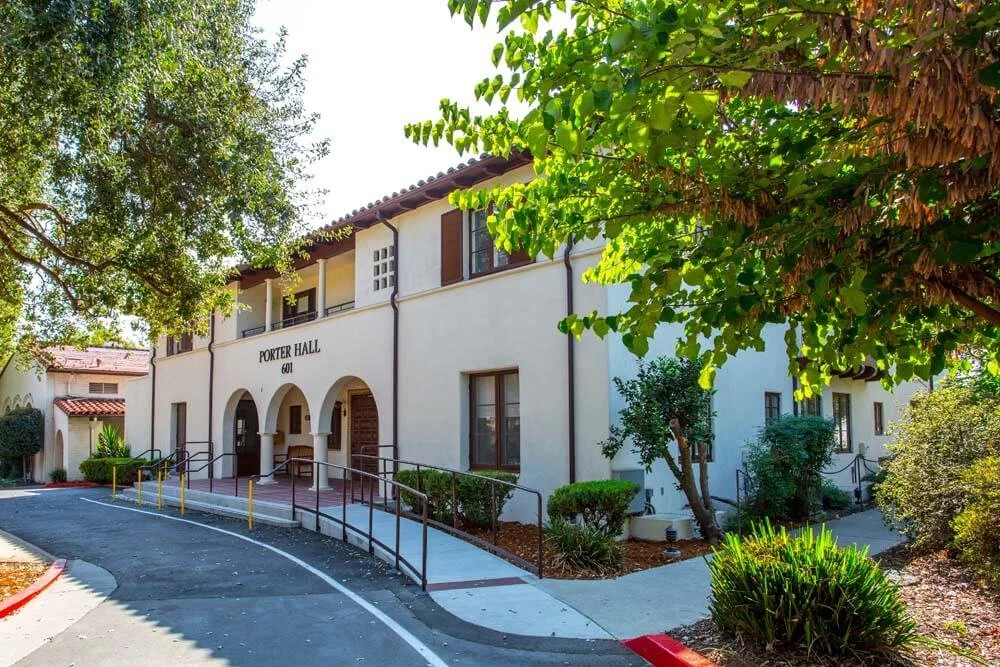
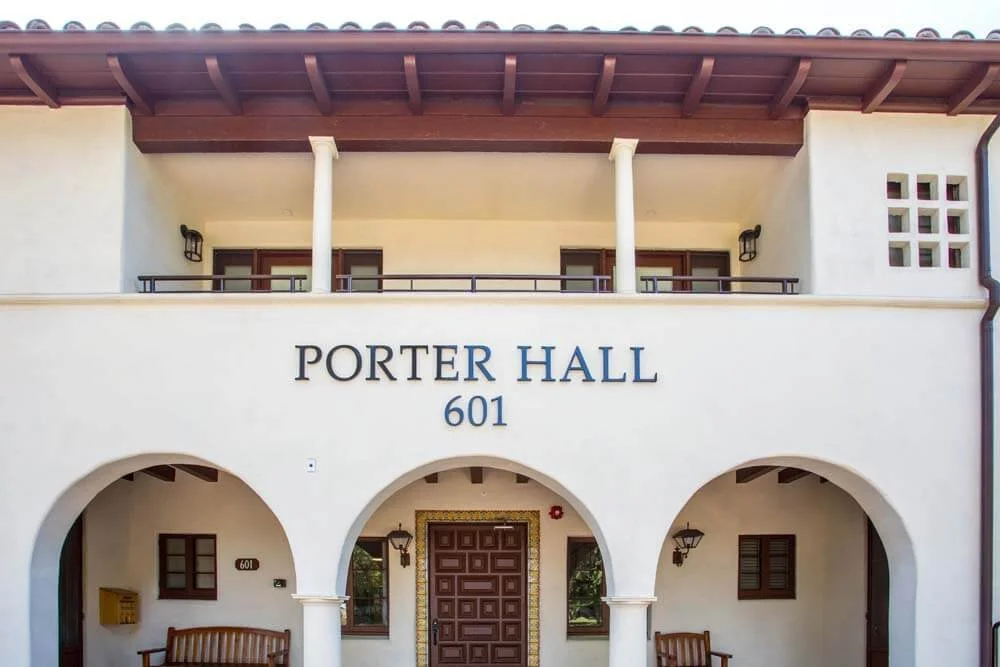
Walk through the Pilgrim Place campus in Claremont, California, and one building draws your attention first. Porter Hall has stood here since 1930. Sunlight pools across the reading room. Residents gather in the community lounge for conversation and shared quiet. Family members arriving for a visit stay in the guest rooms. It's the heart of the community center, and it carries the name of someone who helped shape Pilgrim Place from the very beginning.
This is Porter Hall — named in memory of Mary H. Porter, a missionary, a founder of Pilgrim Place, and a presence still felt across the community more than a century after she helped imagine it.
This piece is for anyone curious about Pilgrim Place's roots, or for adult children helping a parent think through what kind of retirement community holds onto a meaningful history. We'll walk through what Porter Hall actually is today, what we know about Mary H. Porter and the founding of Pilgrim Place, the building's 1930 construction and recent restoration, and how a nearly-century-old building continues to anchor daily life in our values-driven continuing care retirement community in California.
What Is Porter Hall Today?
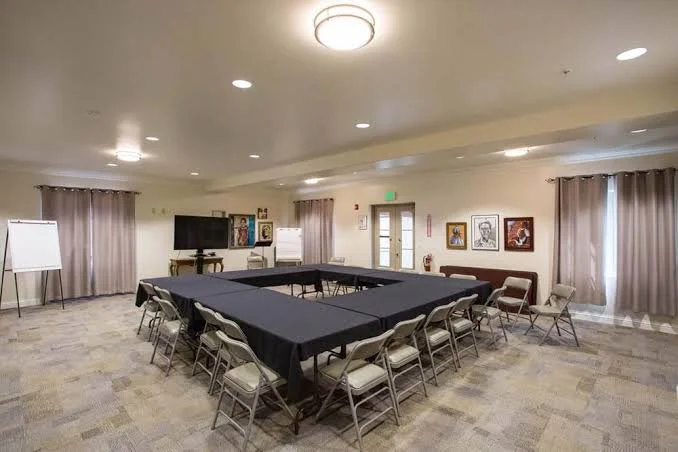
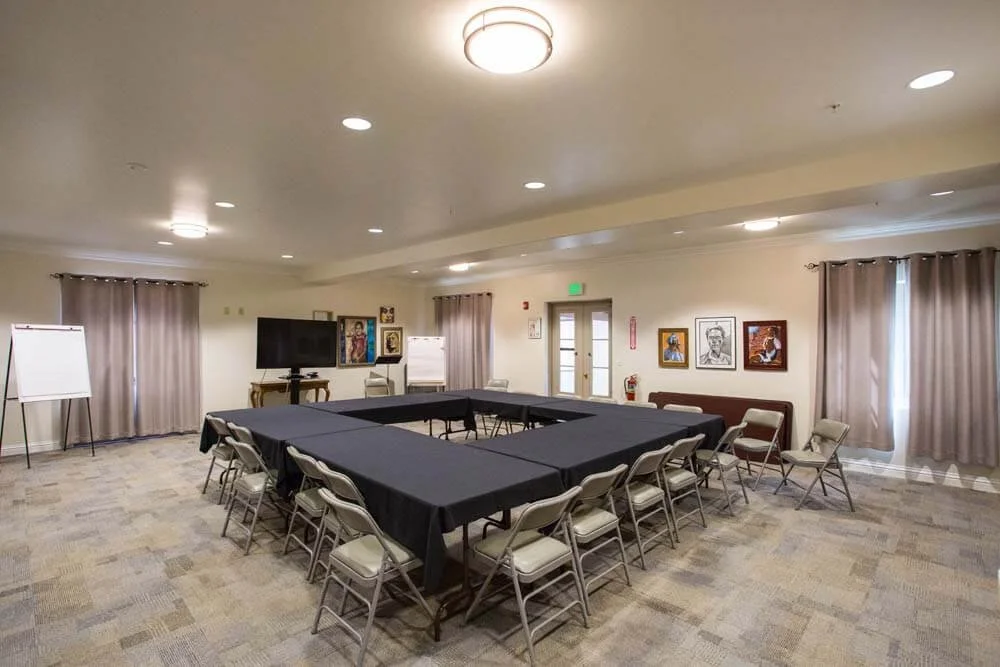
Porter Hall is one of the places where daily life at Pilgrim Place naturally gathers. It holds the library, a bright reading room, a community lounge, and guest rooms for visiting family, but its importance is not only in what the building contains. It is in how residents use it.
People pass through Porter Hall on their way across campus, settle in with a book, pause for conversation, meet a friend, or welcome family for a visit. On many mornings, the Morning Dancers bring music and movement to the front of the building.
Porter Hall has stood on campus since 1930, but its meaning begins before the first stone was set in place. The building carries the name of Mary H. Porter, one of the people who helped shape Pilgrim Place from its earliest days.
To understand why her name belongs on one of the community’s most beloved buildings, it helps to go back to 1915, when Pilgrim Place itself was founded.
Mary H. Porter: A Founder of Pilgrim Place
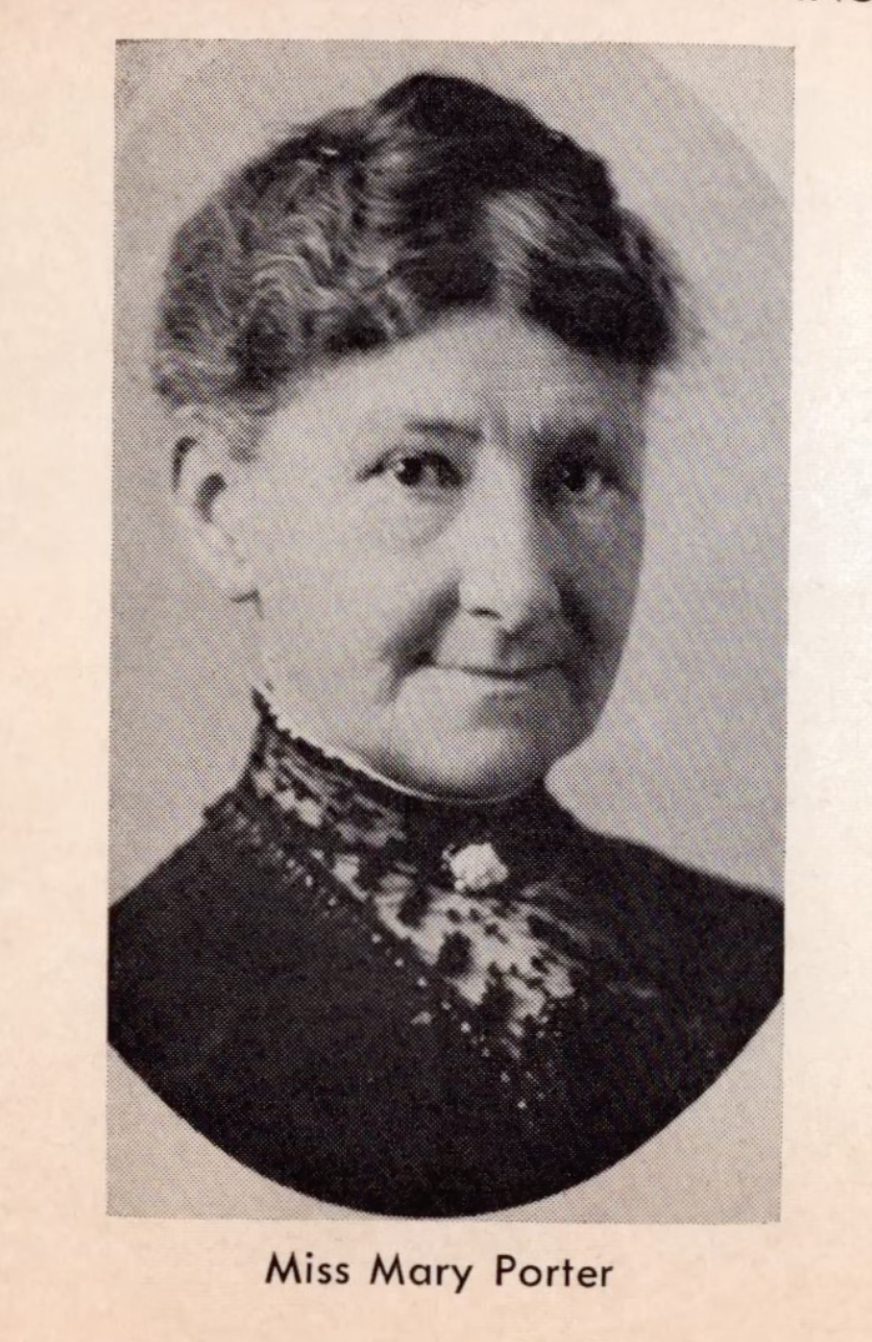
Mary H. Porter and her husband, John Porter, were missionaries in China before they helped found Pilgrim Place in 1915. They were among a small group of founders who together imagined a different kind of community: a place for missionaries returning from international service to live, rest, and continue contributing in retirement.
The founding group included:
James Blaisdell, then President of Pomona College
Frances and Edwin Norton, with Edwin serving as the first Dean of Pomona College
Mary H. and John Porter, missionaries with deep international experience
That founding cohort is significant. Pilgrim Place grew up alongside the Claremont Colleges, in the same intellectual and spiritual ecosystem. The founders brought together academic leadership, religious vocation, and missionary service. The community they imagined reflected the breadth of those backgrounds.
Mary H. Porter is described by Pilgrim Place as "a major influence in the development" of the community. The dedication of Porter Hall, in her memory, in 1930, suggests how much the early community valued her contributions. She was, in the language of an earlier era, one of Pilgrim Place's founding mothers.
What we know with confidence about Mary H. Porter rests on a few clear facts: her missionary work in China, her partnership with John Porter, both in their mission service and in their work to establish Pilgrim Place, and the lasting influence she had on the community's early years. Detailed biographical records of individual missionaries from this era can be hard to come by, and Pilgrim Place's own historical archives are the richest source of information about her specific life and contributions. For residents and visitors who want to learn more, the community archives and library — housed within Porter Hall itself — are the right place to start.
The Founding Story: Claremont, 1915
To understand why Porter Hall matters, it helps to understand what Pilgrim Place started out to be.
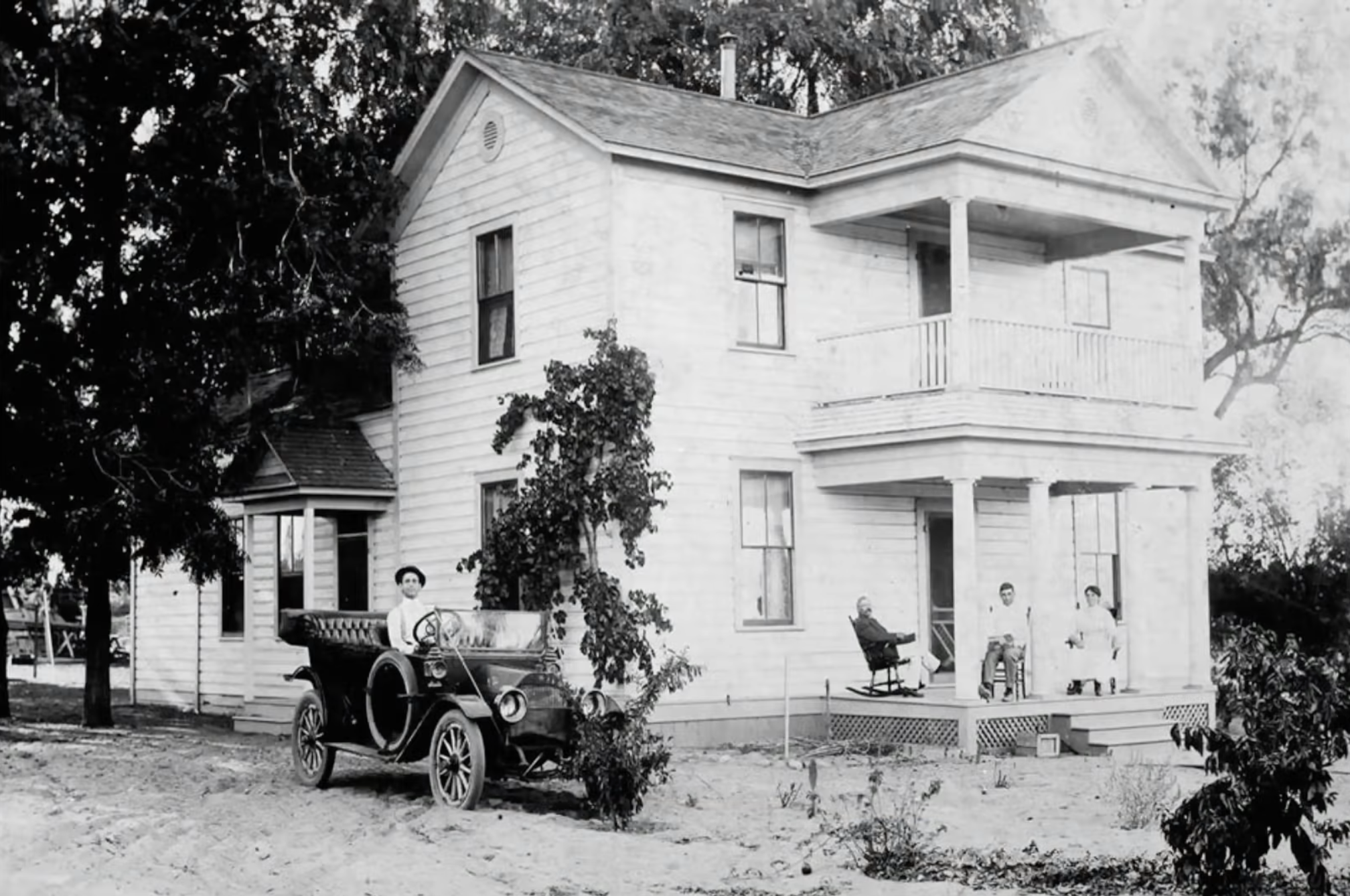
Pilgrim Place began in 1915 as the Claremont Missionary Home, originally located on the grounds of what is now Scripps College. Its purpose was practical and tender: to provide a place where missionaries returning from international service could rest, gather with peers, and find a community that understood the lives they had lived.
In the mid-1920s, Pilgrim Place moved to its present 32-acre campus in the 600 block of Mayflower Road in Claremont. It was during this period of growth, just a few years after the move, that Porter Hall was built — among the earliest dedicated buildings on the present campus.
The community's mission has expanded over the decades. Today, Pilgrim Place is home to residents who have spent careers in education, ministry, social work, public service, the arts, science, and advocacy, alongside those with international missionary backgrounds. The continuum has widened. The founding values — service, community, and lifelong purpose — have remained.
The 1930 Building
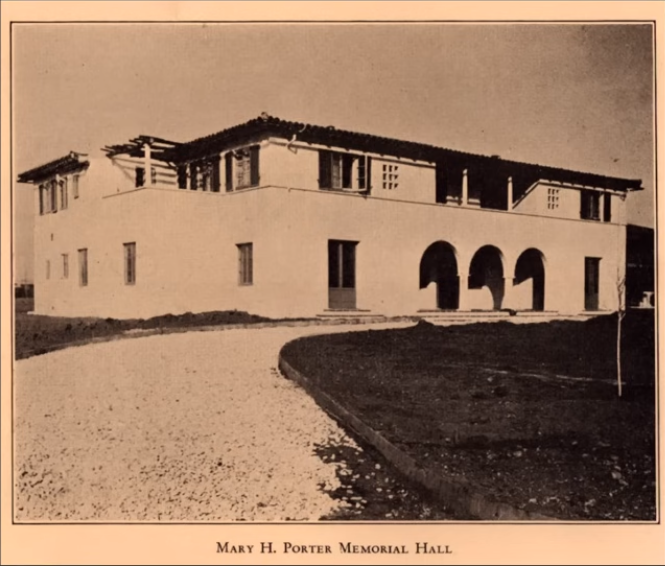
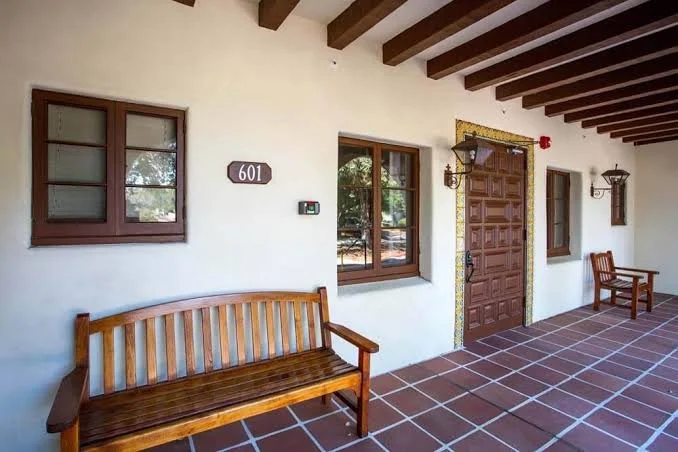
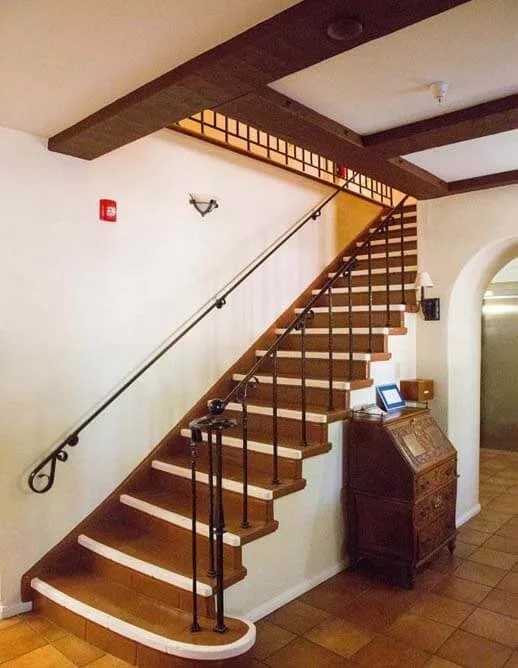
Porter Hall is a 1930 building with the proportions and materials of its era — solid, well-made, designed to last. Inside, the spaces feel intentionally varied. The library and reading room invite quiet hours with a book. The community lounge supports conversation and gathering. The guest rooms make it possible for visiting family to stay close while a resident shows them around the campus.
For a building that has anchored daily community life for nearly a century, that range of uses still works. The library is genuinely used. The lounge is genuinely a gathering spot. The guest rooms are genuinely occupied, by family members spending a few nights to be near a parent or grandparent.
The 2017 Restoration
In 2017, Porter Hall underwent a major historical restoration. Architect Brian R. Bloom designed the project. Spectra Company served as the general contractor, with deep experience in historical restoration work. The scope included seismic upgrades, a new ADA-accessible elevator, updated building systems, façade rehabilitation, restoration of historic materials, and new interior finishes. Porter Hall re-opened on July 16, 2017.
The result was meaningful. The 1930 character of the building was preserved while the structure was brought into the modern era of safety, accessibility, and energy use. Residents continue to use the space as they have for generations, with the building now equipped for many more years of community life.
How Porter Hall Fits Into Independent Living at Pilgrim Place
Independent Living at Pilgrim Place is structured to give residents both freedom and a foundation. You keep your own schedule, your own friendships, your own creative pursuits. And you have a continuum of care available on the same campus if and when you need it — Assisted Living and Skilled Nursing — without ever having to leave the community you've built.
Porter Hall sits squarely inside that vision. The library is where research projects happen, where book groups meet, where someone sits with a paper and a cup of tea. The community lounge is where impromptu conversations turn into longer ones. The guest rooms make it possible for a visiting daughter or grandchild to stay close.
For prospective residents weighing different continuing care retirement community options in California, this is the kind of quiet but powerful infrastructure that's hard to see from a website. Many retirement communities have lounges and libraries. Far fewer have buildings nearly a century old, named for a founder whose memory continues to shape the community's identity.
The Bigger Picture: Heritage as Continuity
Porter Hall isn't really about a building. It's about what continuity in a community looks like.
Pilgrim Place was founded in 1915 by people, including Mary H. Porter, who believed in service, in community, and in the idea that the later chapters of life could be as purposeful as the earlier ones. More than a century later, that founding vision still shapes the community. Residents arrive with backgrounds in ministry, education, social work, justice advocacy, the arts, and the sciences. They come to keep contributing, alongside neighbors who share that conviction.
A building like Porter Hall — physically, structurally, daily — connects today's community to the people who imagined it. Walking into the library is, in some quiet sense, a continuation of a relationship that began in 1915.
Final Thoughts
If you're researching independent living in Claremont, California, or weighing continuing care retirement community options across the state, the heritage of a community is worth paying attention to. A community shaped by founders like Mary H. Porter — a missionary, a builder of community, and a presence still honored in daily life — is a community where service and continuity aren't marketing language. They are the foundation.
If you'd like to walk through Porter Hall in person, sit by a window in the reading room, and meet the residents who carry the founding vision forward today, we'd love to welcome you to campus.
Schedule a Visit to Pilgrim Place
The best way to understand life at Pilgrim Place is to spend time here. Walk through Porter Hall, see the library and reading room, and meet residents. Schedule a visit or speak with a member of our team to learn more about Independent Living at Pilgrim Place in Claremont, California.
Frequently Asked Questions
-
Mary H. Porter was a missionary in China and one of the founders of Pilgrim Place. Alongside her husband John Porter, James Blaisdell (President of Pomona College), and Frances and Edwin Norton (Edwin the first Dean of Pomona College), she helped establish the community in 1915. Pilgrim Place describes her as "a major influence in the development of Pilgrim Place." Porter Hall was built in her memory in 1930.
-
Porter Hall was built in 1930, among the earliest dedicated buildings on the present Pilgrim Place campus in Claremont, California. The building underwent a major historical restoration completed in 2017, which preserved its 1930 character while bringing in seismic upgrades, an ADA-accessible elevator, and modern building systems.
-
Porter Hall is one of the central community spaces on the Pilgrim Place campus. The building houses the library, a sunlit reading room, a community lounge for residents to gather and converse, and guest rooms for visiting family.
-
Pilgrim Place was founded in 1915 as the Claremont Missionary Home, originally located on the grounds of what is now Scripps College. It moved to its present 32-acre campus on Mayflower Road in Claremont in the mid-1920s.
-
Pilgrim Place's founders included James Blaisdell, President of Pomona College; Mary H. and John Porter, missionaries in China; and Frances and Edwin Norton, with Edwin serving as the first Dean of Pomona College.
-
Yes. Pilgrim Place is a continuing care retirement community in Claremont, California, offering Independent Living, Assisted Living, Memory Care, and Skilled Nursing. The full continuum of care is available on the same campus, so residents can stay in the community they've built as their needs change.
