Meditative Practices at Pilgrim Place: Mindfulness, Qigong, and Tai Chi in a Claremont Retirement Community
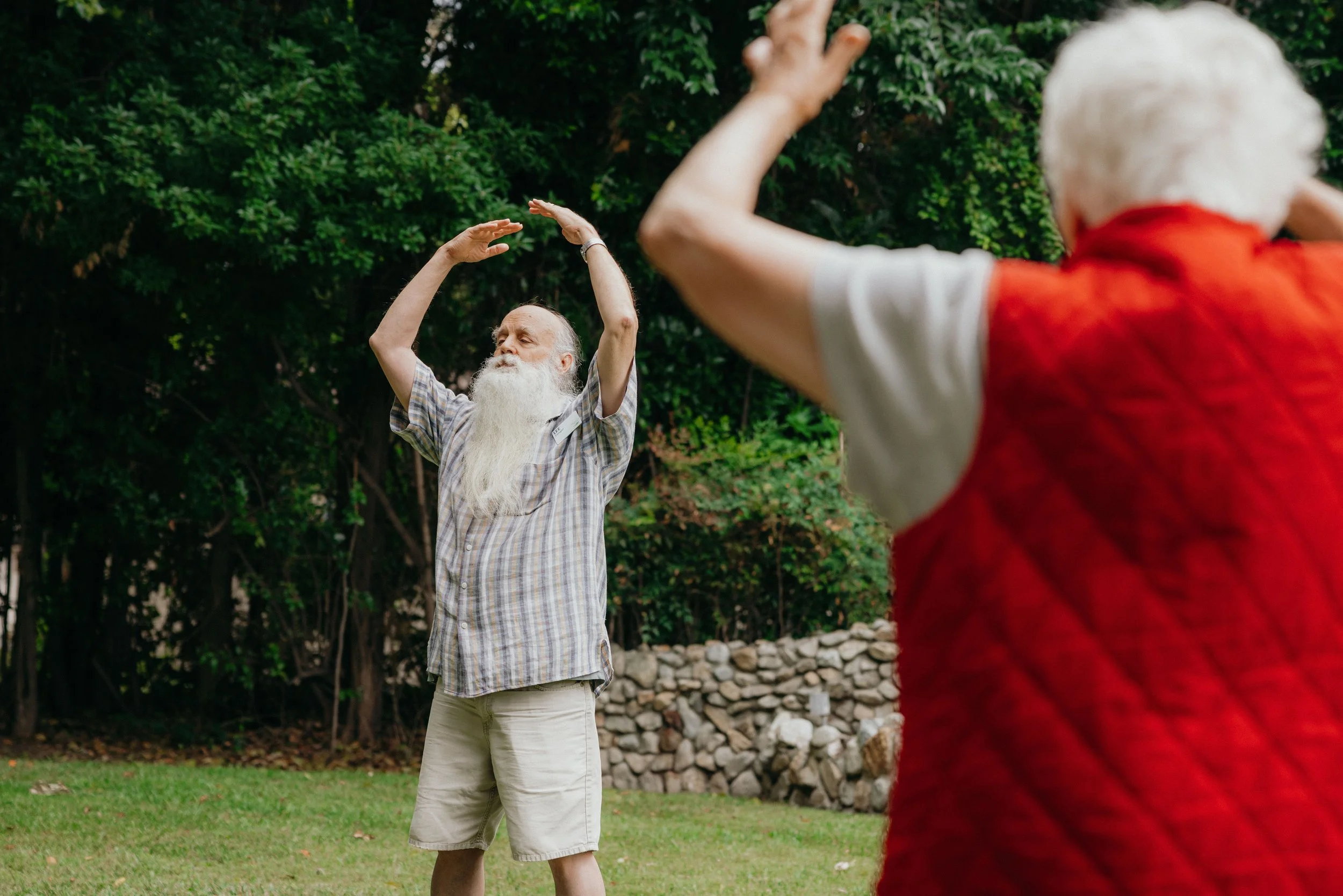
At Pilgrim Place in Claremont, California, meditative practices are woven into the weekly rhythm of campus life. Mindfulness meditation, Qigong, and Tai Chi bring residents and neighbors together to ground themselves in nature, center their spirits, and cultivate a holistic approach to feeding the mind, body, and soul.
For adults researching retirement communities, meditative practices can quietly become one of the most important offerings on campus — not because they are marketed as amenities, but because they shape the texture of daily life. A weekly Tai Chi class in the fresh air, a mindfulness sit in a quiet room, or a Qigong session at the start of the day — these are small practices that make a large difference over months and years.
This piece is for anyone considering Independent Living in Claremont, California, or for adult children helping a parent evaluate the wellness and spiritual offerings at a retirement community. We'll walk through what meditative practices look like at Pilgrim Place, why these practices matter in later life, how mindfulness meditation, Qigong, and Tai Chi each contribute to well-being, and how residents shape a holistic wellness culture that supports the mind, body, and soul together.
What Are the Meditative Practices at Pilgrim Place?
Pilgrim Place hosts three regular meditative practices each week: mindfulness meditation, Qigong, and Tai Chi. Each is offered as an ongoing community class, and each welcomes residents alongside neighbors from the surrounding Claremont community.
These are not one-off wellness features. They are part of the community's weekly rhythm, held in spaces that residents know well, and taught in ways that invite people of all experience levels. A resident who has been meditating for fifty years and a resident who is trying meditation for the first time can sit in the same room and both find the practice useful.
That range is by design. Meditative practice at Pilgrim Place is not for a certain kind of person. It is for anyone who wants to make room in their week for stillness, breath, and gentle movement.
Mindfulness Meditation
Mindfulness meditation is one of the most researched wellness practices of the past several decades. It is also one of the simplest — a practice of quiet attention to breath, body, and the present moment, held long enough to steady the mind and calm the body.
For adults in later life, mindfulness meditation offers several kinds of benefits. It supports stress reduction. It sharpens attention. It softens the anxious edges that can come with change or transition. And it makes space for the deeper reflections that this stage of life often invites — questions of meaning, memory, gratitude, and presence.
At Pilgrim Place, weekly mindfulness meditation is a resident-shaped practice. It fits into a broader community culture that takes the inner life seriously and treats spiritual and reflective practice as a real part of a full life.
Qigong
Qigong is a movement and breathwork practice with roots in Chinese tradition. It combines slow, flowing movement with steady breath and quiet attention. Practitioners often describe it as meditation in motion.
For residents at Pilgrim Place, Qigong offers a way to build strength, flexibility, and balance without strain. The practice is low-impact and joint-friendly, which makes it well suited to a wide range of ability levels. It also cultivates the mind-body integration that is core to holistic wellness.
Weekly Qigong at Pilgrim Place brings residents together for a practice that is easy to learn but rewards long-term commitment. Small daily benefits — steadier balance, deeper breath, a calmer mind — compound over months and years into meaningful gains.
Tai Chi
Tai Chi is one of the most widely respected practices in aging research. Numerous studies have found consistent benefits for balance, strength, flexibility, and fall prevention — three of the most important markers of continued independence in later life.
The practice itself is deceptively simple. Slow, continuous movement. Careful attention to weight, balance, and breath. A steady rhythm that quiets the mind while training the body.
At Pilgrim Place, weekly Tai Chi classes fit into a broader wellness culture that includes the Aquatic Fitness Center, the Morning Dancers, walking paths across the 32-acre campus, and the shorter daily movements that come from campus life itself — walking to Porter Hall, to Pendleton Arts Center, to Decker Hall, to The Castle for Friday coffee.
Why Meditative Practices Matter in Later Life
The years around and after 70 tend to invite reflection. There is more time for it. There is often more reason for it. And there are often more resources for it, if a community has built them into daily life.
Meditative practices offer real, measurable benefits at this stage of life. They reduce stress. They support sleep. They improve balance and reduce fall risk. They deepen a sense of presence and gratitude. They help a person move through change — of health, of relationships, of routine — with more steadiness.
For adults choosing a retirement community, the availability of meditative practices matters. But the deeper question is whether these practices are integrated into the community's daily culture or treated as optional add-ons. At Pilgrim Place, they are integrated. That distinction shows up in small ways — in the number of residents at any given class, in the ease with which someone new can start, and in the way the practices are treated as part of a full life rather than a wellness trend.
A Holistic Approach: Mind, Body, and Soul
Pilgrim Place's approach to meditative practice reflects a broader philosophy. Wellness at this stage of life is not just physical. It is not just mental. It is not just spiritual. It is all three, held together and supported day by day.
Mindfulness meditation supports the mind. Qigong and Tai Chi support the body. The interfaith services and seasonal celebrations across the community support the soul. Together — alongside the creative work at Pendleton Arts Center, the intellectual life at Andiron and the Current Affairs Forum, and the resident-led programs that shape daily life — they add up to a wellness culture that treats residents as whole people.
That holism is one of the things that makes Pilgrim Place distinctive among continuing care retirement communities in California. Wellness here is not a menu of amenities. It is a practice.
Grounding in Nature
Many of the meditative practices at Pilgrim Place happen in relationship with the community's natural setting. The 32-acre campus is landscaped with California native plants and thoughtful walking paths. Just five minutes away, the California Botanic Garden — the largest botanic garden dedicated to California native plants — offers 86 acres of living museum for anyone who wants to keep walking.
That relationship with the natural world matters. Meditative practice in a garden or under a tree lands differently than the same practice in a windowless studio. It reinforces the connection between inner attention and outer environment that is central to most contemplative traditions.
At Pilgrim Place, residents ground themselves in nature not as an occasional retreat but as a daily availability.
The Bigger Picture: A Community That Takes Inner Life Seriously
Pilgrim Place's meditative practices are part of a broader community culture that takes the inner life seriously. Many residents come to Pilgrim Place with lifelong contemplative practices of their own. Many arrive with backgrounds in ministry, spiritual teaching, or work that required deep attention over decades. That collective seriousness gives the meditative practices at Pilgrim Place a depth that is difficult to fake.
For prospective residents evaluating retirement communities in California, that depth matters. A community that treats meditative practice as an amenity will offer classes. A community that treats it as a practice will make the practice part of daily life. Pilgrim Place is the latter.
Final Thoughts
If you are researching independent living in Claremont, California, or considering values-driven retirement community options across the state, the meditative practices at Pilgrim Place are one of the small, working parts of daily wellness on campus. Mindfulness meditation. Qigong. Tai Chi. Practiced weekly, in a community rooted in the belief that later life should be full — of thought, of movement, of gratitude, and of stillness.
You are welcome to come see it. Attend a class. Meet residents who have made contemplative practice part of their week. Ask about the traditions and the teachers. You will find a community that has been quietly serious about the inner life for a long time — and that continues to shape a wellness culture around mind, body, and soul.
Schedule a Visit to Pilgrim Place
The best way to understand the wellness and spiritual life at Pilgrim Place is to spend time here. Attend a meditative practice, walk the campus, meet residents. Schedule a visit or speak with a member of our team to learn more about Independent Living at Pilgrim Place in Claremont, California.
Frequently Asked Questions
-
Pilgrim Place hosts weekly mindfulness meditation, Qigong, and Tai Chi classes. Each practice is offered as an ongoing part of the community's wellness calendar and welcomes residents alongside neighbors from the surrounding Claremont, California community.
-
No. Meditative practices at Pilgrim Place welcome residents of all experience levels — from those who have practiced for decades to those trying meditation, Qigong, or Tai Chi for the first time. Classes are designed to meet residents where they are.
-
Meditative practices support reduced stress, improved sleep, sharper attention, and deeper reflection. Movement-based practices like Qigong and Tai Chi also support balance, flexibility, and fall prevention — three factors closely tied to continued independence at this stage of life.
-
Yes. Meditative practices at Pilgrim Place bring residents and neighbors together to ground themselves in nature and center their spirits. The community welcomes participation from outside the campus.
-
Meditative practices sit alongside the Aquatic Fitness Center, weekly Morning Dancers, walking paths across the 32-acre campus, an on-site Wellness Clinic, and the many resident-led activities that shape daily life. Together they reflect a holistic approach that supports mind, body, and soul.
-
Pilgrim Place is a values-driven continuing care retirement community in Claremont, California, located on a 32-acre campus at 625 Mayflower Road. Independent Living inquiries can reach the community at (909) 768-7698.
