
Resident Governance at Pilgrim Place: How Residents Actually Shape the Community
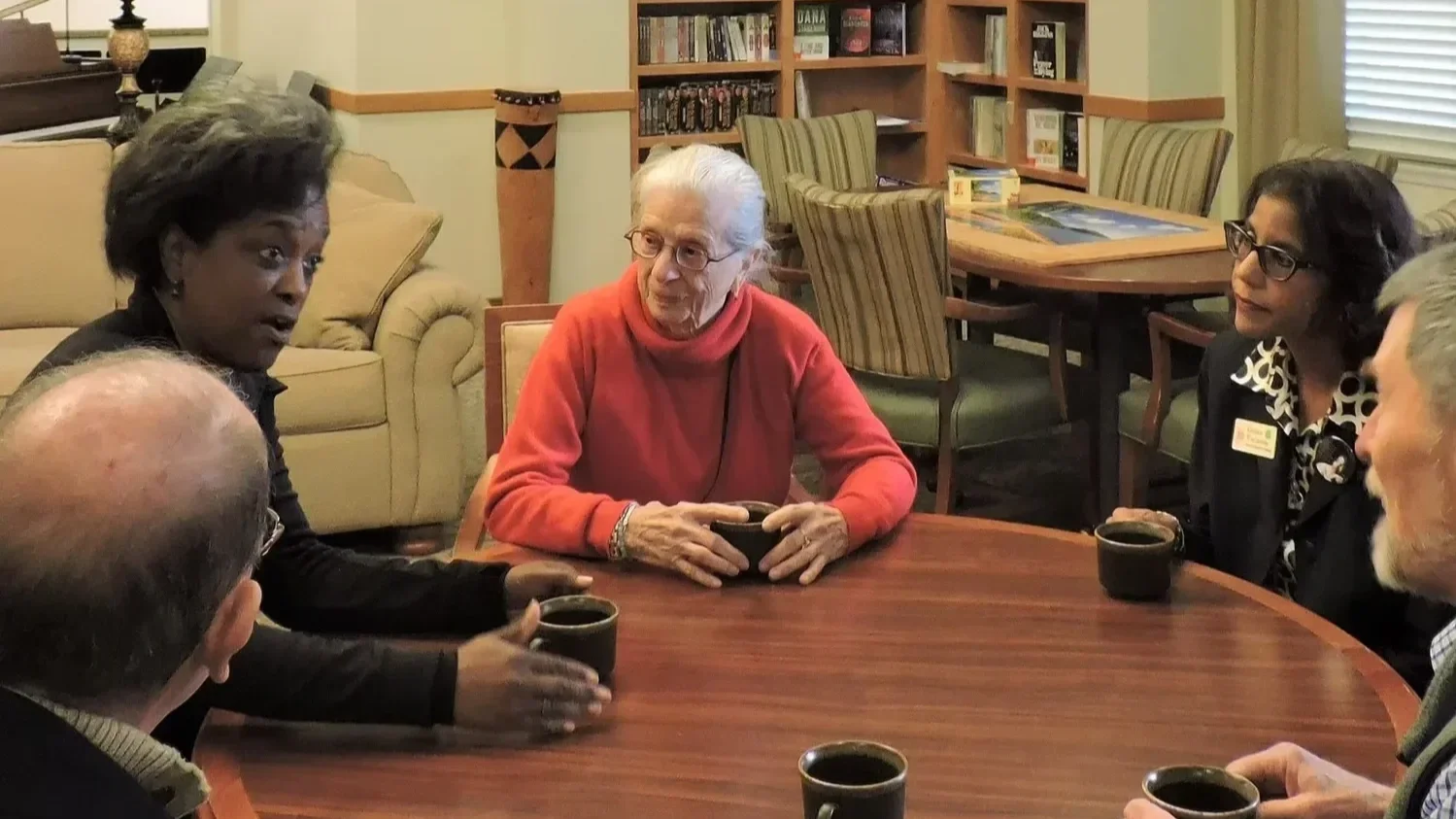
At Pilgrim Place in Claremont, California, resident governance is a core tenet of who we are. All campus committees are resident-led. Residents work closely with staff to shape both the physical and cultural environment of the community. That model is not a marketing framing. It is how the community actually functions day to day.
For prospective residents evaluating retirement communities, resident governance is one of the most consequential structural questions to ask. A community where residents genuinely shape decisions is a community where residents remain agents in their own lives. A community where decisions are made by management and communicated downward is a community where residents become recipients rather than participants.
This piece is for anyone considering independent living in Claremont, California, or for adult children helping a parent evaluate whether a retirement community will treat their parent as a decision-maker or as a beneficiary of decisions made elsewhere. We will walk through what resident governance looks like at Pilgrim Place, why the model matters for daily life and long-term satisfaction, how residents and staff actually work together, and what to look for on tour if resident-led governance matters to you.
What Is Resident Governance at Pilgrim Place?
Resident governance at Pilgrim Place means that all campus committees are led by residents. The committees cover the substantive areas of community life: campus and facilities, community life and programming, wellness, environmental stewardship, dining, spiritual life, resident welcome, and many others.
Committee members are residents. Committee chairs are residents. Committee agendas are shaped by resident priorities. Staff work closely with the committees, providing expertise, operational context, and support, but the direction of the work is set by the residents whose community it is.
That structure has a compounding effect over years. Residents who arrive with careers in organizing, policy, ministry, education, and administration bring their governance experience into community life. The result is a community that runs on a genuine culture of participation rather than on the passive consumption of services.
Why Resident Governance Matters in a Retirement Community
The word retirement can imply stepping back from responsibility. At Pilgrim Place, we take a different view. Residents come here because they want the next chapter of life to remain meaningful, and meaningful life requires the ability to shape one's environment.
Communities where residents have no formal governance role tend to develop a specific dynamic. Residents become customers. Small frustrations accumulate. The distance between what management prioritizes and what residents actually experience grows over time. Eventually the community's culture drifts in ways that no one specifically chose.
Communities with genuine resident governance avoid that drift. Residents identify problems early. Residents shape the solutions. Residents feel ownership of the community they are living in. That sense of ownership is not just a philosophical benefit. It shows up in daily life as engagement, in satisfaction as retention, and in outcomes that residents helped design themselves.
How Residents and Staff Actually Work Together
Resident governance at Pilgrim Place is not a rejection of staff expertise. Staff bring operational knowledge, professional training, and continuity that residents cannot always provide. The model works because residents and staff work closely together, each bringing different strengths.
Residents bring lived experience of the community, direct knowledge of what is working and what is not, and the historical memory of what has been tried before. Staff bring operational capacity, regulatory expertise, and the ability to execute decisions across the organization.
The result is a partnership. Committees identify priorities. Staff support implementation. Community-wide decisions get made with genuine input from the people they affect most. Neither residents nor staff dominate the process. Both are necessary.

What Resident Governance Looks Like in Daily Life

For a resident, the practical experience of resident governance shows up in small ways and in large ways.
Small ways. A resident who notices a problem with a walking path knows which committee handles it. A resident with an idea for a new program can bring it to the community life committee. A resident with concerns about dining can raise them directly with the dining committee. Response times are fast because the residents receiving the input are neighbors, not remote decision-makers.
Large ways. Community-wide decisions about campus improvements, cultural programming, dining direction, sustainability practices, and welcoming culture all pass through resident committees. Residents are not consulted after the fact. They are part of making the decision from the start.
For adult children evaluating retirement communities for a parent, that practical difference is worth watching for on any tour. Ask specifically about how decisions are made. Ask which decisions residents actually shape versus which decisions come from management. The gap between community marketing and community operations often shows up most clearly in the answer.
The Bigger Picture: A Community Built by the People Living In It
Pilgrim Place was founded in 1915 by a group whose commitments included community, shared work, and a sense that later life should remain purposeful. Resident governance is one of the most visible modern expressions of that founding instinct. The community continues to be built by the people living in it.
For prospective residents comparing values-driven retirement community options in California, that is worth naming as its own factor. Many retirement communities offer resident councils that meet occasionally. Fewer treat resident governance as a genuine operational model where all committees are resident-led. Pilgrim Place is one of the communities that takes the model seriously.
Final Thoughts
If you are researching independent living in Claremont, California, or considering purpose-driven retirement community options across the state, the resident governance model at Pilgrim Place is one of the most consequential parts of how the community actually works. Not the marketing framing, but the actual structure that shapes what happens on any given Wednesday.
Come to a committee meeting if the timing works. Ask a current resident what governance role they hold or have held. What you learn will tell you a great deal about whether Pilgrim Place is the kind of community where you would remain an agent in your own life.
Schedule a Visit to Pilgrim Place
The best way to understand how residents shape the community at Pilgrim Place is to spend time here. Meet residents, ask about committee involvement, and see the model in practice. Schedule a visit or speak with a member of our team to learn more about Independent Living at Pilgrim Place in Claremont, California.
Frequently Asked Questions
-
Resident governance at Pilgrim Place means that all campus committees are led by residents. Committees cover community life, facilities, wellness, dining, environmental stewardship, spiritual life, and other substantive areas of community operation. Residents shape both the physical and cultural environment of the community.
-
Committee members and chairs at Pilgrim Place are residents. Staff work closely with committees to provide operational expertise and support, but the direction of committee work is set by residents.
-
Residents identify priorities and shape decisions through the committee structure. Staff bring operational knowledge and execution capacity. The partnership means that community-wide decisions are made with genuine input from the people they affect most, rather than being handed down from management.
-
Resident governance keeps residents as active participants in their own community rather than passive recipients of decisions made elsewhere. Communities with genuine resident governance tend to see stronger engagement, faster response to issues, and less cultural drift between what management prioritizes and what residents experience.
-
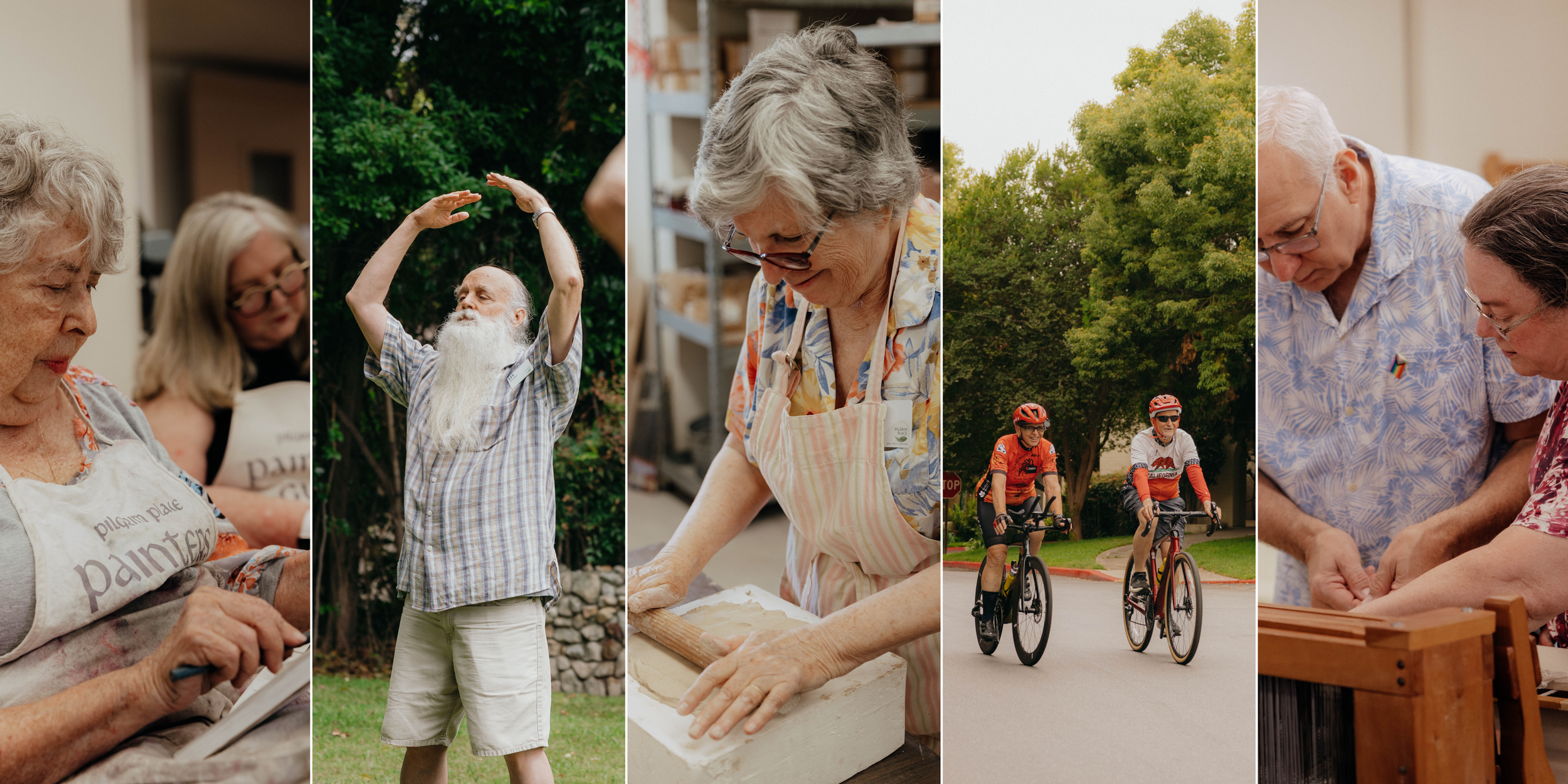
Resident governance is one of several ways residents actively shape the community. It sits alongside Andiron, the Current Affairs Forum, the Napier Initiative with the Claremont Colleges, the Patient Advocacy program, and many resident-led practices that make Pilgrim Place a genuinely resident-shaped community.
-
Pilgrim Place is a values-driven continuing care retirement community in Claremont, California, located on a 32-acre campus at 625 Mayflower Road. Independent Living inquiries can reach the community at 909-399-5504
