Every November, on the second Friday and Saturday, Pilgrim Place's campus in Claremont, California, fills with tables of pottery and quilts, racks of gently used clothing, children's crafts, live music, and pies. Thousands of people come. Admission is free. And almost no one who walks through the gates for the first time knows the full story of how the Festival touches the lives of Pilgrim Place residents.
The Festival exists so that residents of Pilgrim Place who outlive their savings can stay in their homes, in their community, with their dignity intact. Every dollar of net proceeds goes to the Resident Health and Support Program, which covers the gap when daily living costs or unexpected medical expenses exceed what a resident can pay. The 2025 Festival, together with First Saturday Sales and related sales and event efforts, produced a check for $307,923.75, presented at the community's annual town meeting on January 8, 2026.
That is the short answer. The longer answer takes a hundred years to tell, and it explains a great deal about what kind of community this is.
How Pilgrim Place Began
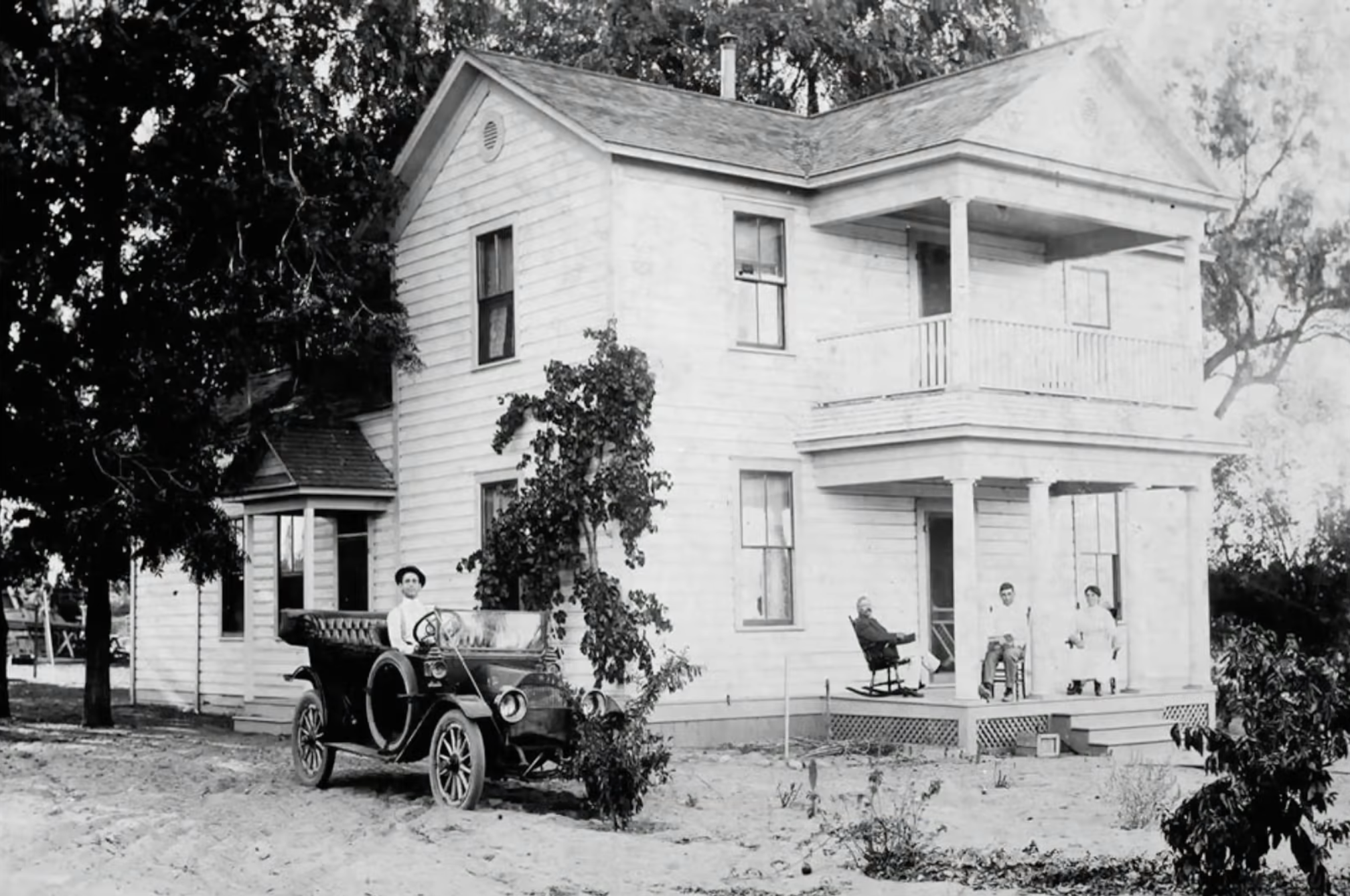
Pilgrim Place was incorporated on January 8, 1915, as the Claremont Missionary Home. Its purpose was specific: a place where Congregational missionaries could live between overseas assignments and, eventually, in retirement. Many had spent decades in service abroad and returned to the United States with little money and no home of their own. The founders, among them Mary H. Porter, for whom Porter Hall is named, believed that people who had given their lives to service deserved a community that would hold them at the end of it.
In 1924, the home took the name Pilgrim Place. Over the following decades, it grew from a handful of residences into a campus of cottages, apartments, gathering halls, and eventually a full continuum of care, with assisted living and skilled nursing alongside independent living. The residents changed too. What began as a home for missionaries became a community of clergy, educators, social workers, activists, and, more recently, people from many professions and many faiths, or no faith at all, drawn to the same values of service, justice, inclusion, and lifelong learning.
One thing did not change. From the beginning, Pilgrim Place was built for people who had not spent their working lives accumulating wealth. The question of what happens when a resident's resources run out was never hypothetical here. It was the founding problem.
The Founding Problem
A continuing care retirement community makes a promise: move in while you are independent, and the community will be there as your needs change. That promise is easy to keep for a resident with deep savings. It is much harder when someone has lived carefully on a modest pension, paid their fees faithfully for twenty years, and then outlives their money at ninety-two.
Most communities handle that moment quietly and, often, badly. Pilgrim Place decided early that it would handle it as a community. The commitment that no resident would be asked to leave for lack of funds became part of the culture, and the Resident Health and Support Program is the structure that makes it real. The program pays for what residents cannot, whether that is a shortfall in monthly fees, an unexpected medical cost, or the expenses of a move to a higher level of care on campus. A commitment like that needs support and funding every single year. Which brings us to 1948.
1948: The First Festival
The first Pilgrim Place Festival was held in 1948. Residents organized it themselves, selling crafts, baked goods, and items donated by neighbors, with the proceeds supporting fellow residents in need. By today's standards, it was a modest event. What made it last was not its size but its logic: the people who would one day need help were the same people doing the work, and the people doing the work knew exactly that they were helping their fellow residents in need
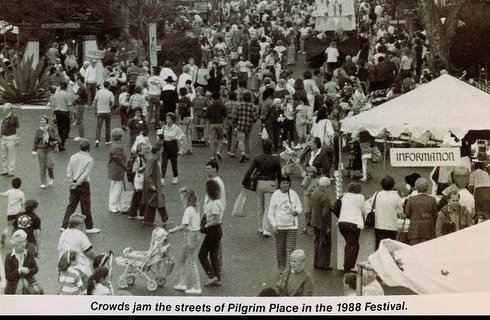
That philosophy has held for 78 years. The 2026 Festival, on November 13 and 14, is the 78th. It has grown into one of Claremont's largest annual gatherings, but residents still plan and run it, with a Festival Committee that spends the better part of a year preparing for two days.
What Happens at the Festival
If you have never been, here is what fills the campus for two days each November.
Hand-crafted work by residents
Pilgrim Place is home to some serious artists. Some residents were artists before they came to Pilgrim Place, while others picked up their artistic interests after becoming residents. The Pendleton Arts Center hums all year with painters, potters, jewelers, woodworkers, weavers, quilters, and stained glass makers, and the Festival is where that year of work goes on sale. Buying a piece means owning something made by a neighbor who will likely be at the table to tell you about it.
Gently used treasures
Residents and friends of the community donate furniture, housewares, holiday decor, framed art, jewelry, clothing, books, plants, collectible stamps and coins, and items gathered from around the world over lifetimes of travel and service. The sales are deliberately sustainability-minded: a second life for good things, and a first life for the proceeds.
Food
Fresh produce, pies, jams, baked goods, and affordable meals. The pies have a following.
Children's activities
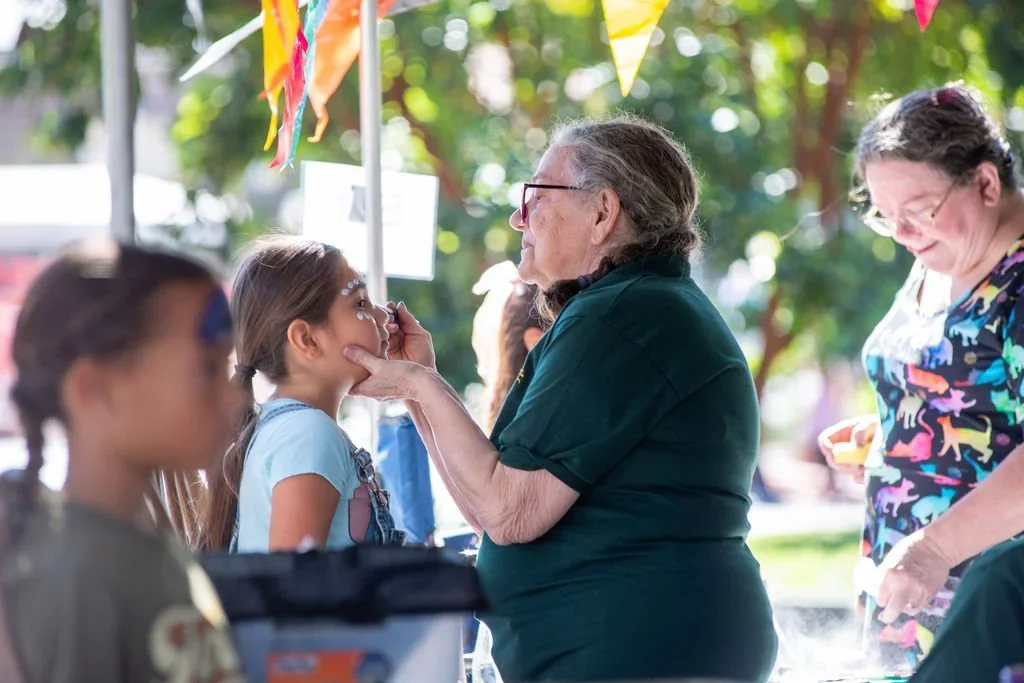
Free crafts, rides, live animal exhibits, and opportunities to learn about the native Tongva people whose land this is. We often hear from Festival visitors who remember attending as children and now return with their own children, carrying on a beloved Claremont tradition from one generation to the next.
Music
Local school bands and orchestras, mariachi ensembles, jazz, and folk sing-alongs run across both days. The 2026 lineup includes the El Roble Middle School Bands and Orchestra, The Jazz Doctors Quartet, Mariachi Serrano, and the dA Mini Mariachis of Pomona.
Admission and parking are free. The point was never to charge people to come in. The point is what they find once they are here.
Where the Proceeds Go
Every dollar of net proceeds from the Festival goes to the Resident Health and Support Program. In practice, that fund does several things:
It covers monthly fee shortfalls for residents whose income and savings no longer meet the cost of living in the community.
It helps with unexpected medical expenses that would otherwise force hard choices.
It supports residents through moves within the continuum of care, from independent living to assisted living or skilled nursing, when the cost of that care exceeds their means.
Requests for support are handled with confidentiality and care. Residents selling pottery, running the plant booth, and volunteering throughout the Festival help sustain a program that provides a vital safety net for neighbors who need it. It's a reflection of what makes Pilgrim Place special: a community committed to looking out for one another.
The 2025 result, $307,923.75 in net proceeds from the Festival combined with First Saturday Sales and related event efforts, gives a sense of the scale. It is not a token gesture. It is a meaningful share of what the program needs to keep its promise each year.
First Saturday Sales: The Festival's Year-Round Cousin
The Festival is the big event, but the same work continues on the first Saturday of most months. First Saturday Sales open the campus resale shops to the public, sell donated goods, and donate the proceeds to the same Resident Health and Support Program. If you cannot make it in November, the first Saturday of any month will capture the same spirit.
Why This Matters If You Are Considering Pilgrim Place
People exploring independent living in Claremont sometimes read about the Festival as a charming local event and move on. It deserves a closer look, because it tells you a deeper story about the community you would be joining.
The community keeps its promises in a visible way. The continuum of care is not only a set of buildings. It is backed by a culture that has raised funds for 78 years so neighbors can stay. That is a different kind of security than a line in a contract.
The values are also established and real. Service, inclusion, and mutual care were the founding reasons for Pilgrim Place in 1915. They are not a marketing position adopted last year. The Festival is one of the clearest places to see them at work.
How to Take Part
Come.
November 13 and 14, 2026, 10:00 AM to 4:00 PM, on the Pilgrim Place campus in Claremont. Free admission and parking.
Volunteer.
The Festival runs on volunteer hours, and the community welcomes neighbors who want to help.
Donate goods.
Gently used housewares, art, books, and collectibles are accepted ahead of the Festival and for First Saturday Sales.
Sponsor.
Local businesses and families support the Festival, some even naming a specific Festival attraction or area.
Visit the community.
If the story behind the Festival resonates, schedule a visit and see the rest of what Pilgrim Place is.
Final Thoughts
The Festival exists because a community founded for people who had given everything away decided, more than a century ago, that no one would be asked to leave when their financial resources ran out. In 1948, residents found a way to fund that decision with their own hands, and they have done it every November since. The pies, the pottery, and live music are the surface. Underneath is a promise, kept.
Schedule a Visit to see Pilgrim Place for yourself, or join us at the 78th Annual Festival on November 13 and 14.
Frequently Asked Questions
-
The 78th Annual Pilgrim Place Festival takes place Friday and Saturday, November 13 and 14, 2026, from 10:00 AM to 4:00 PM on the Pilgrim Place campus in Claremont, California. Admission and parking are free.
-
All net proceeds go to the Pilgrim Place Resident Health and Support Program, which helps residents stay in their homes and receive care when daily living costs or unexpected medical expenses exceed their resources.
-
Residents first held the Festival in 1948 to support fellow residents in need. It has been held every year since.
-
The 2025 Festival, together with First Saturday Sales and related event efforts, produced net proceeds of nearly $308,000 for the Resident Health and Support Program.
-
Hand-crafted items by resident artists (pottery, paintings, jewelry, woodcrafts, stained glass, quilts, knitted and woven goods), gently used housewares, clothing, books, plants, and collectibles, plus baked goods, pies, jams, and fresh produce.
-
Pilgrim Place was incorporated on January 8, 1915, as the Claremont Missionary Home, a residence for Congregational missionaries. It took the name Pilgrim Place in 1924 and is now a values-driven continuing care retirement community in Claremont, California.
